Introduction to NLP Class 10 (CBSE 417) helps students understand how computers interact with human language. Based on the CBSE curriculum, this topic explains how machines read, interpret, and respond to text and speech, with examples such as chatbots, email filters, and translation tools.
What is Natural Language?
A natural language is a human language, such as French, Spanish, English, Japanese, etc
Features of Natural Languages:
- They are governed by set rules that include syntax, lexicon, and semantics.
- All natural languages are redundant, i.e., the information can be conveyed in multiple ways.
- All natural languages change over time.
What is NLP?
Natural Language Processing (NLP) is the sub-field of AI that focuses on the ability of a computer to understand human language (command) as spoken or written and to give an output by processing it, is called Natural Language Processing (NLP). It is a component of Artificial Intelligence.
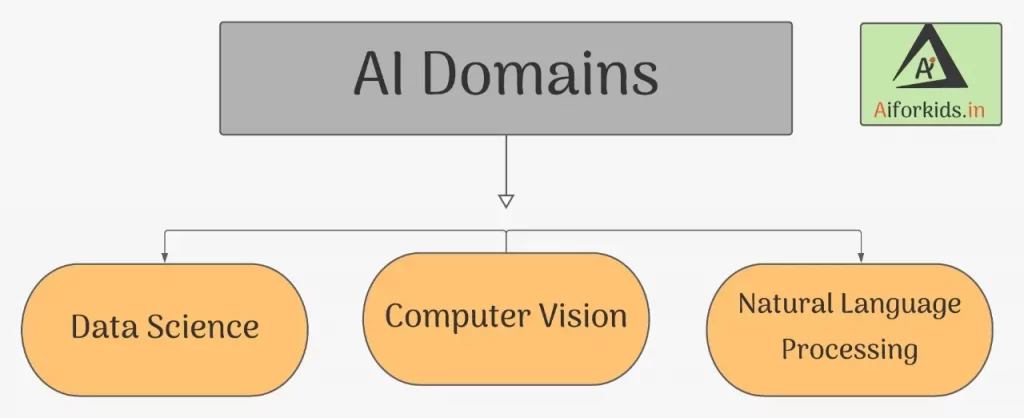
Till now we have covered two domains of AI that is Data Science & Computer vision and NLP is Third Domain of AI
- Data Science: It is all about applying mathematical and statistical principles to data or in simple words, Data Science is the study of Data, This data can be of 3 types – Audio, Visual and Textual.
- Computer Vision: In simple words is identifying the symbols from the given object (pictures) and learning the pattern and alert or predicting the future object using the camera.
Applications of NLP
Some of the applications of Natural Language Processing that are used in the real-life scenario:
Automatic Summarization
- Summarizing the meaning of documents and information
- Extract the key emotional information from the text to understand there actions (Social Media)
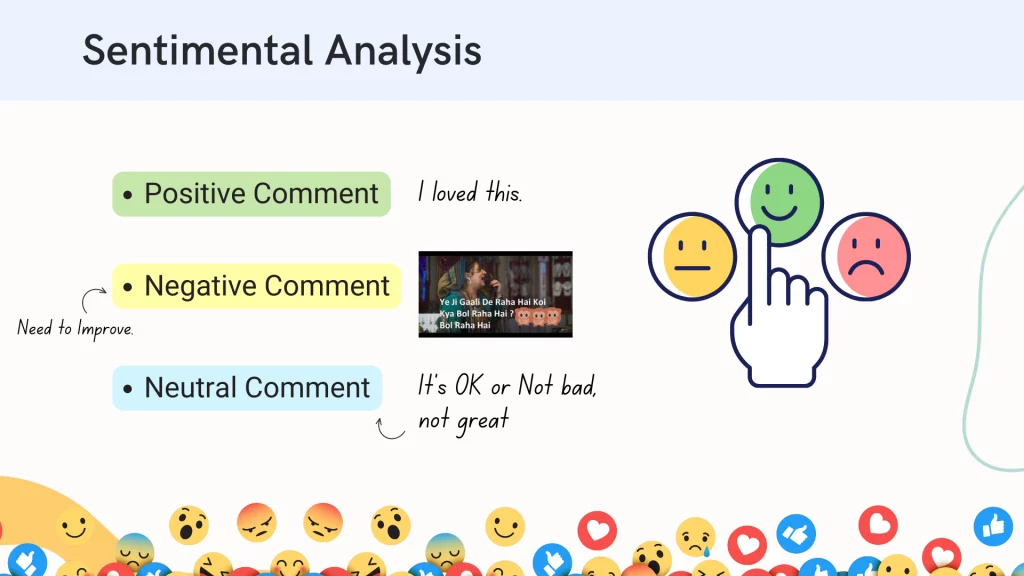
Sentiment Analysis
- Definition: Identify sentiment among several posts or even in the same post where emotion is not always explicitly expressed.
- Companies use it to identify opinions and sentiments to understand what customers think about their products and services.
- Can be Positive, Negative or Neutral
Text Classification
- Text classification makes it possible to assign predefined categories to a document and organize it to help you find the information you need or simplify some activities.
- For example, an application of text categorization is spam filtering in email.
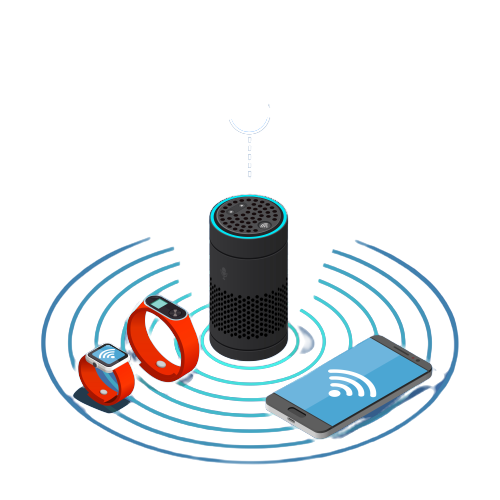
Virtual Assistants
- Nowadays Google Assistant, Cortana, Siri, Alexa, etc have become an integral part of our lives. Not only can we talk to them but they also have the ability to make our lives easier.
- By accessing our data, they can help us in keeping notes of our tasks, making calls for us, sending messages, and a lot more.
- With the help of speech recognition, these assistants can not only detect our speech but can also make sense of it.
- According to recent research, a lot more advancements are expected in this field in the near future
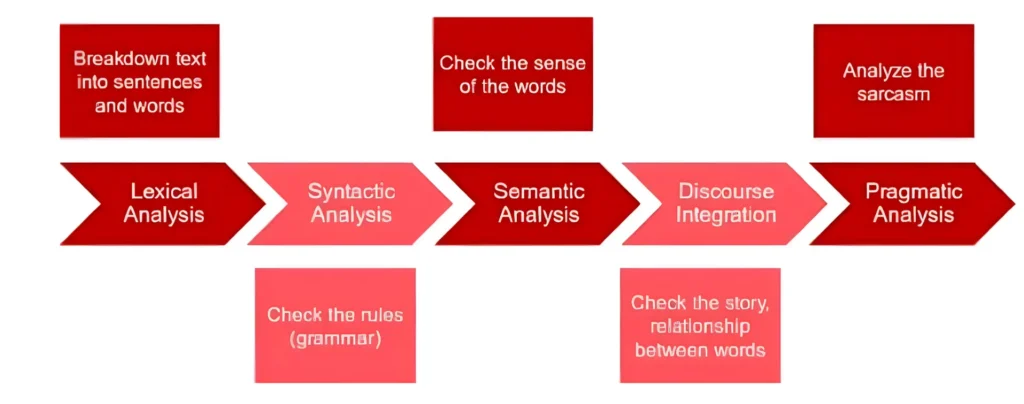
Stages of Natural Language Processing (NLP)