
A lending desk has one instruction: give a camera to anyone holding a blue card. The first student shows a blue card and receives the camera. The next student shows a blue bus pass. If the desk follows its instruction exactly, what happens? That awkward second exchange is the lesson.
This invented classroom scene gives learners something more concrete than a definition to discuss. They can point to an input, state the rule, predict an action and identify an unintended result. A teacher can run the exercise with paper props and spoken dialogue. There is no need for student accounts, personal data or a working application.
Write The Instruction Before Writing The Dialogue
Start with one decision that can be performed in front of the class. Lending a camera is useful because the outcome is visible: the object crosses the desk or stays behind it. Keep the stakes fictional and modest. The activity is about how a condition controls an action, not about designing a real school’s equipment policy.
Write the initial condition on a card the whole class can read. Do not quietly add requirements when a surprising case appears. If the rule says only that the card must be blue, its author cannot later insist that everyone should have understood it meant an approved lending card. That missing distinction is precisely what students are examining.
The desk operator should have less freedom than an ordinary character. Their task is to follow the stated condition, even when common sense suggests a different response. Give the other performer a prop and a request, not an instruction to trick the operator through an elaborate joke. The blue bus pass already supplies a clear counterexample.
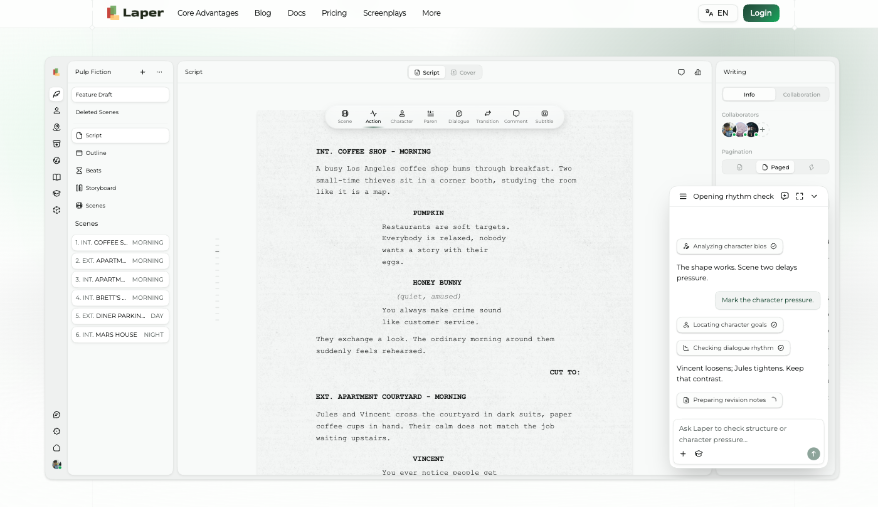
A teacher drafting the demonstration in Laper can use its AI Script Writer to suggest short exchanges around the supplied condition. The teacher should keep the rule unchanged while reviewing those suggestions. A charming line that lets the operator infer an unstated exception would make the skit more natural but the exercise less useful.
Prepare the condition independently of any generated dialogue. Before rehearsing, ask the operator, “What information are you allowed to use?” If they say they will recognize a real lending card, point back to the instruction: it mentions color alone. Resolve that difference openly. Otherwise the performer may quietly repair the rule during the scene and leave the class with no counterexample to explain.
Pause Where A Prediction Becomes An Action
Run the ordinary case first. A student holds the intended blue lending card, asks for the camera and receives it. Stop just before the handover and ask the class to predict the result. The answer should refer to the visible input and the written condition, rather than to whether the student seems trustworthy or deserves the equipment.
Now introduce the bus pass. Use the same request, desk and camera so that the changed prop carries the comparison. Pause again. Some learners may answer with the sensible real-world outcome; others may answer with the action required by the literal rule. Ask both groups to explain their reasoning before the operator moves.
That disagreement is worth keeping. On the board, separate what the rule directs from what the designer intended. Students can then see that a faithfully executed instruction may still produce an unwanted outcome. A performer who follows the faulty rule has not necessarily made an execution error. The class needs to inspect the specification as well.
Let learners propose a repair in plain language. One might specify an approved lending card rather than any blue card. Another might require the name on the card to match a booking. Discuss what new information each proposal requires. A condition is difficult to apply if the operator has no way to observe or check the thing it mentions.
Try the repaired rule against both original cases before inventing more. The legitimate request should still work, while the bus pass should no longer qualify. If the revision blocks everyone, it has removed the unwanted handover by breaking the ordinary use. That is a useful result to notice, not a reason to hide the attempt.
Keep Handwritten Rules Distinct From Learned Models
Name the boundary of the demonstration explicitly. This skit uses conditions authored by people. It does not train a model on examples, discover a pattern from a dataset or demonstrate how a language model produces dialogue. Calling every decision in the scene “AI” would blur the distinction the lesson should help students investigate.
AIForkids’ project-cycle materials discuss rule-based and learning-based approaches within the wider modelling topic. The lending desk can serve as a small illustration of a manually specified rule. It should not be offered as a complete explanation of machine learning. A model learned from data requires a different discussion of examples, training and evaluation.
Suppose the teacher asks an AI Script Writer Generator for two versions of the bus-pass exchange, then chooses the clearer one. That preparation uses generated language; the desk still follows a handwritten condition. Ask learners to name which of those activities they are discussing. The source of the dialogue does not turn the fictional desk into a machine-learning model.
Laper supplies a writing environment for preparing the scene, not an interpreter that executes the classroom’s conditions. The teacher and performers must check the branching logic themselves. Any AI-suggested exception should be treated as a proposed change to the exercise, not as evidence that the original instruction contained more information than it actually did.
Change One Condition And Rehearse Its Consequences
For a second round, give groups the same faulty instruction but different candidate repairs. Keep the original two prop cards available. Each group should write the revised condition, perform the two cases and explain any additional information its operator needs. This creates several inspectable proposals without turning the activity into a contest for the most complicated policy.
A third case can expose ambiguity in the repair. An approved lending card might be expired, for example. Introduce that detail only after students understand the first distinction. Too many exceptions at the beginning encourage guessing about an invisible policy. One added case at a time makes it easier to locate why a proposed decision changes.
Keep a short record of rejected revisions. “Ask whether the student is responsible” sounds reasonable but gives the operator no clear test. “Accept only this exact card” may work for one prop and fail to describe a usable category. These attempts are more informative when their weaknesses remain visible beside the improved condition.
Laper’s typed screenplay layout can keep the operator’s spoken lines separate from action directions in the teacher’s rehearsal copy. Label alternative versions clearly rather than blending all the repairs into one continuous scene. The resulting document is a performance aid; the written conditions and classroom discussion remain the basis for evaluating the exercise.
Close with an approved lending card printed in a different color. Does the final rule accept it? The answer depends on the condition the class actually wrote, not the repair the teacher hoped they would choose. Ask students to trace that condition aloud before moving the camera. A disagreement now has somewhere concrete to go: back to the words on the card.